Cow Parsnip (Heracleum maximum)

The Cow Parsnip (Heracleum maximum), also known as Indian Celery, Pushki, Satan celery, or poison turnip, is the only member of the genus Heracleum that is native to North America. Heracleum is a genus of biennial and perennial herbs found from the northern hemisphere to as far south as Ethiopia.
| Group | Value |
|---|---|
| Kingdom | Plantae |
| Division | Magnoliophyta |
| Class | Magnoliopsida |
| Order | Apiales |
| Family | Apiaceae |
| Genus | Heracleum |
| Species | Heracleum maximum |
Facts and Trivia
Like many in the genus Heracleum, Cow Parsnip contains furanocoumarins, a sap that, if it gets on your skin & becomes exposed to sunlight, can cause severe blistering or burns (phytophotodermatitis).
Because the nectar is completely exposed, Cow Parsnip caters to a massive variety of insects, including bees, parasitic wasps, predatory beetles, hoverflies, and butterflies. Grizzly bears, black bears, elk, cows, goats, and deer forage for the young rosettes and stalks, which are tender and packed with sugars.
Crushing a mature, dry Cow Parsnip seed releases a strong aroma, smelling intensely of citrus zest, anise (licorice), and a musky herbal fragrance.
Uses
The plant can stand 4 to 10 feet tall. The stems are hollow and have been used by Indigenous peoples across North America as drinking straws, moose calls, and musical flutes or whistles.
The plant can also be used as a dermatological aid, applied to bruises or sores after prepared properly.
Humans can eat the plant at specific stages.
Stages of Growth
-
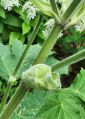 Early bud stage
 -
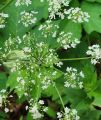 Early bloom
 -
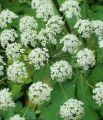 Peak bloom
 -
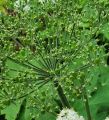 Post bloom
 -
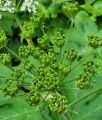 Advanced seed production


1. Seedling and Initial Germination
When: Late Winter/Early Spring (March - April)
Seeds require a period of cold stratification (exposure to freezing temperatures) to break dormancy. When the ground warms, a small taproot anchors into moist soil, sending up tiny cotyledons (seed leaves).
2. Vegetative Rosette Stage
When: Mid to Late Spring (April - May)
For the first year or two, cow parsnip does not produce a flowering stalk. It focuses on underground storage and funnels all its energy into a thick, deep taproot. Above ground, it forms a low-lying rosette of leaves, which can stretch to over 2 feet wide to capture as much sunlight as possible to fuel the root system.
3. Early Bud Stage
When: Late Spring (Late May)
Once the plant has stored enough energy, it undergoes a massive growth spurt. A deeply ridged stem shoots upward and grows several inches a day. At the top of the stalks, large leafy sheaths form containing tightly packed flower clusters.
4. Early Bloom
When: Early Summer (early June)
The protective sheaths swell and split open, allowing immature flower heads to rise and expand into a structure called and umbel. An umbel is a flat-topped flower cluster where individual stalks radiate from a central point. The flowers are small and white.
5. Peak Bloom
When: Mid Summer (mid-June - early July)
The flat-topped flower arrays fully expand, reaching up to a foot in diameter. The large central umbel is surrounded by smaller, secondary side-umbels. The outward-facing petals are significantly larger and split to provide a runway for pollinators.
6. Post Bloom
When: Late Summer (July)
Once pollination is successful, the white petals drop, leaving behind the green architectural skeletons. The energy shifts immediately away from attraction and entirely into development.
7. Advanced Seed Production
When: Late Summer to Early Autumn (August - September)
The green arrays transform into heavy clusters of dry, papery fruit (seeds) called schizocarps. The seeds are flat and wide, designed for wind dispersal. A single robust plant can produce thousands of seeds.
8. Senescence and Winter Dormancy
When: Mid Autumn through Winter (October - February)
After a massive flowering event, the main flowering stalk dies completely, turning a brittle brown while the seeds drop to the ground. A winter freeze restarts the sequence.
Timeline Notes
Textbook timelines are broad regional averages. Because nature doesn't fit a rigid calendar, these lifecycle stages can occur out of sync due to a combination of microclimates, genetics, and shifting seasonal weather. For example, if a pocket of soil within a patch of Cow Parsnip dries out early, it can trigger emergency flowering. If the plant senses stress or lack of water, it speeds through its bloom stage to ensure it sets seeds before drying out completely. Additionally, unusually warm springs can shift the entire timeline forward. Umbels may be uneven on the same stem, with a top central umbrella opening first, blooming fast, and dropping petals before a secondary umbel lower on the stem opens.
The gallery of photos included on this page were taken in late May and include five stages of the Cow Parsnip lifecycle.
Links
- WikiDoc: Cow Parsnip
- Wikipedia: Heracleum maximum
- Identified using iNaturalist
- Native Plant Fun Facts: The Charismatic Cow Parsnip
- Cow Parsnip: Identification, Edible Parts, and Cooking
